Pediatric respiratory emergencies algorithm
 Written by Jessica Munoz DNP, RN, CEN
Reviewed by Jessica Munoz DNP, RN, CEN
Changes: Updated PALS/BLS algorithm PDF
Managing respiratory emergencies for pediatrics depends on the condition. Attempt to keep the child calm and positioned in a manner of comfort, such as in the caregiver's arms. Do not attempt to separate the child from their caregiver as this can exacerbate crying and anxiety and worsen the respiratory status. Suction nasal airways as needed, supply oxygen as needed, and monitor respiratory status with pulse oximetry and ECG monitoring as indicated. Follow the BLS guidelines as indicated.
Printed crash cart cards
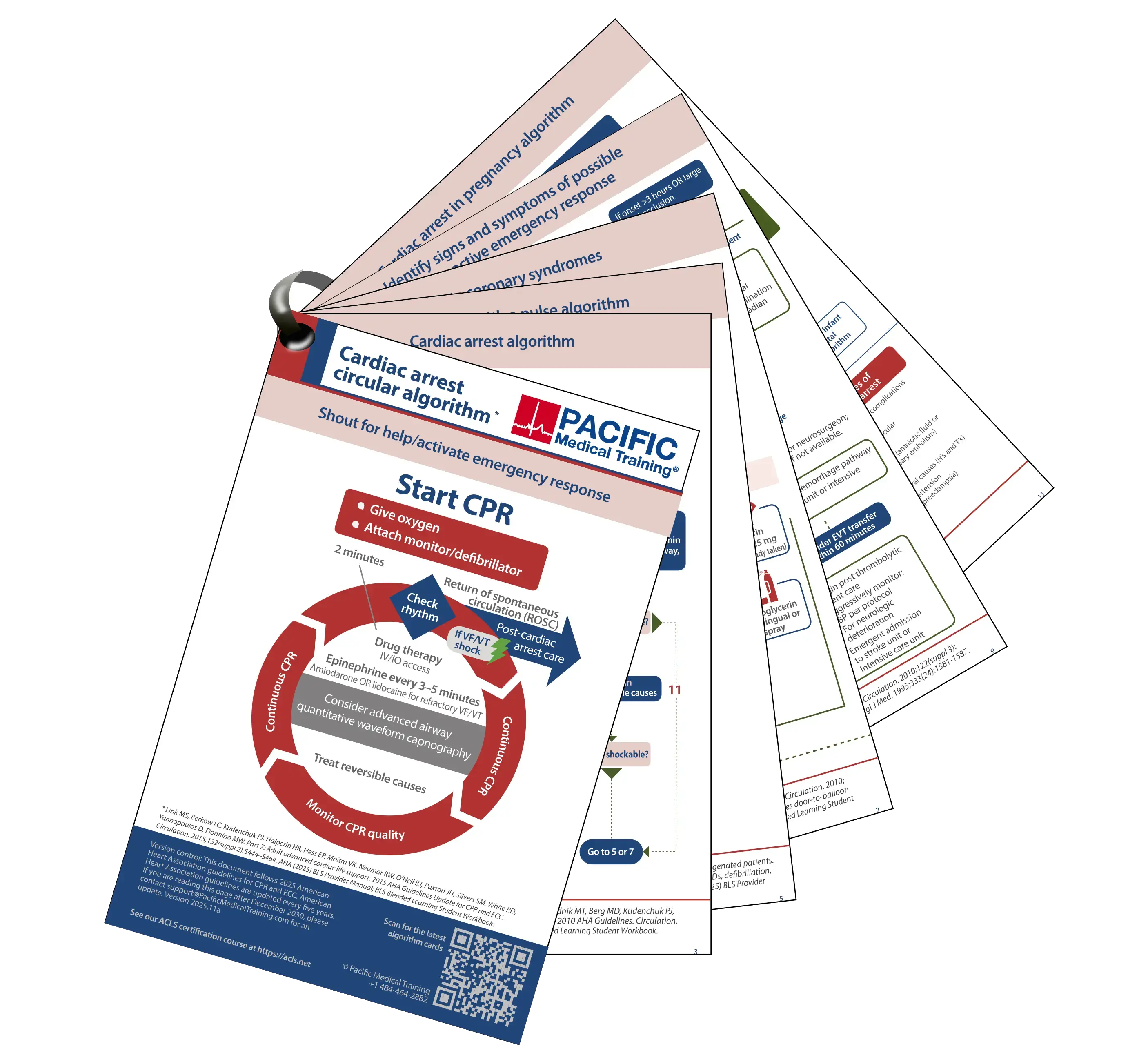
Order the full set of printed crash cart cards.
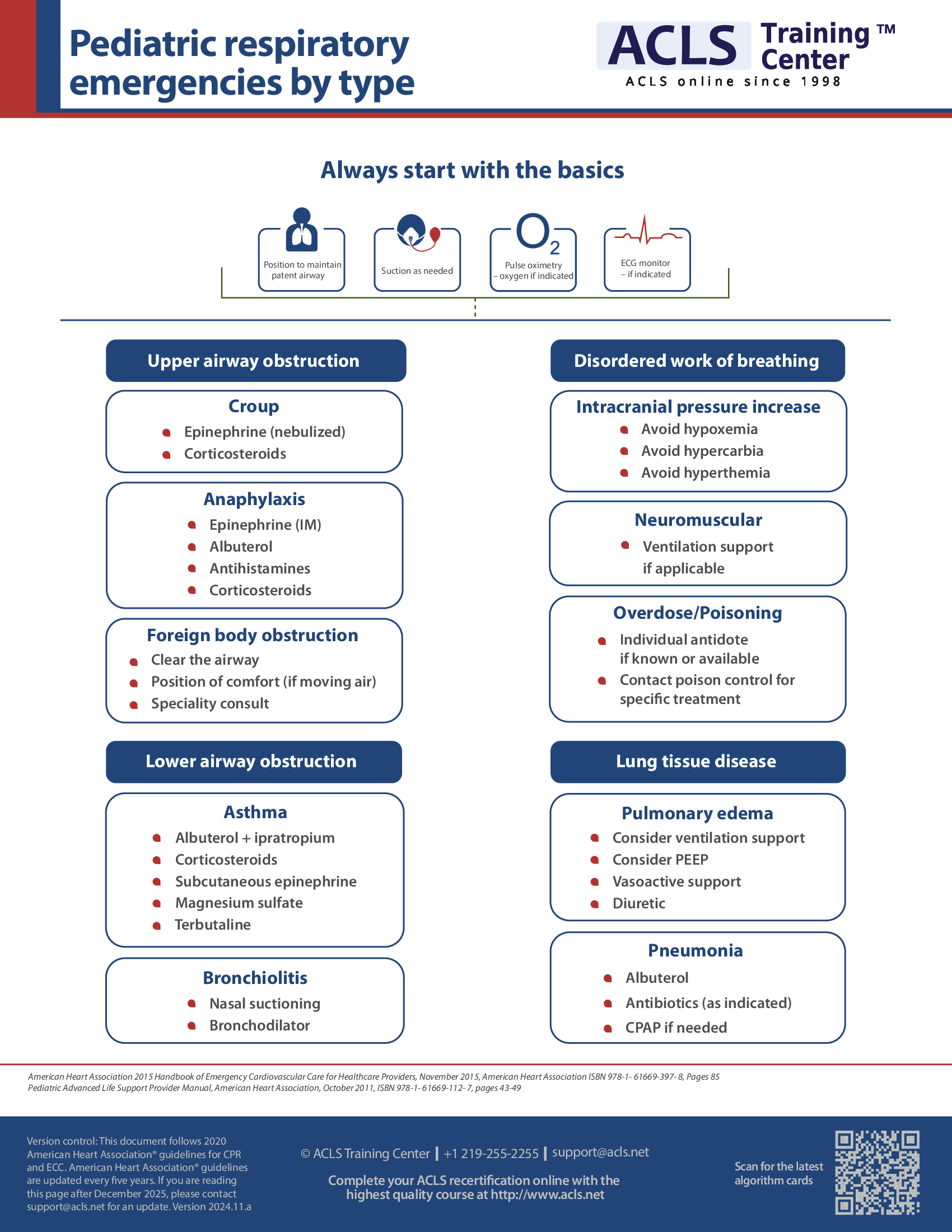
Upper airway obstructions include croup. This respiratory condition can be managed with nebulized epinephrine and corticosteroids. An anaphylaxis reaction requires immediate IM epinephrine, preferably with an auto-injector, albuterol, antihistamines, and corticosteroids. If the child is aspirating on a foreign body, attempt to clear the airway, place them in a position of comfort, and obtain a specialty consultation for further evaluation.
Conditions of the lower airway include bronchiolitis and asthma. Bronchiolitis can be managed by nasal suctioning and bronchodilators. Asthma can be managed with nebulized albuterol and ipratropium treatment, oral corticosteroids or IV depending on the severity, magnesium sulfate IV, IM epinephrine if the condition is severe or terbutaline SC or IV.
Conditions that cause disordered work of breathing include intracranial pressure, neuromuscular disease, and overdose/poisoning. Intracranial pressure is a complication from trauma or disease process that affects the breathing pattern. Along with supporting the airway, it is crucial to avoid hypoxemia, avoid hypercarbia, avoid hyperthermia, and avoid hypotension. Poisoning/overdose is managed with the antidote if available and by contacting poison control for more direction. Neuromuscular diseases can be managed with non-invasive or invasive ventilatory support.

Planning to certify/recertify ACLS?
Get a reminder when you need to take the exam
Please verify or enter a different email address:
How we reviewed this article
Our experts continually monitor the medical science space, and we update our articles when new information becomes available.
- Current versionMail the author of this pageEmail
- Jul 9, 2026
Reviewed by:
- Feb 10, 2026
Copy edited by:
Copy editorsChanges: Updated PALS/BLS algorithm PDF- Jul 29, 2021
Written by: