Cardiac arrest in pregnancy algorithm: Assessments and actions
 Reviewed by Jessica Munoz DNP, RN, CEN
Changes: Initial creation
Cardiac arrest in pregnancy requires immediate initiation of high-quality BLS and ALS with modifications to optimize maternal and fetal outcomes. Resuscitation should begin without delay, focusing on effective chest compressions and early defibrillation when indicated. When the fundal height is at or above the umbilicus, continuous left lateral uterine displacement should be performed to relieve aortocaval compression and improve venous return. Airway management should be prioritized early, as difficult airways are common in pregnancy, and should be performed by the most experienced provider available.
Printed crash cart cards
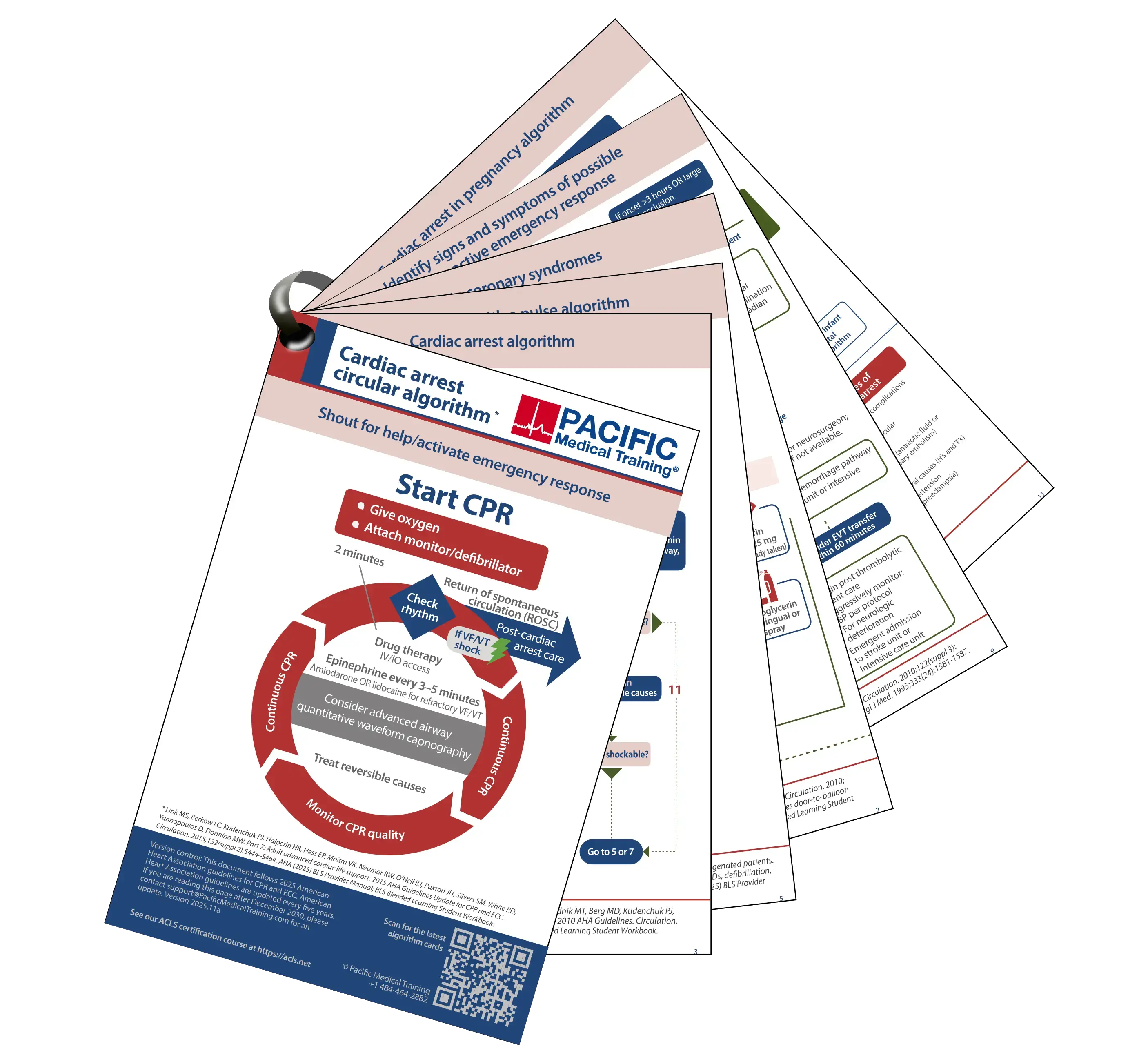
Order the full set of printed crash cart cards.

During resuscitation, intravenous access should be placed above the diaphragm. If the patient is receiving intravenous magnesium, discontinue magnesium administration and administer calcium as indicated. Fetal monitors should be detached, and a massive blood transfusion protocol should be activated if amniotic fluid embolism is suspected. The cardiac arrest in pregnancy response team should be activated early and may include a team leader, anesthesiologist, obstetrician, neonatologist, nurses, pharmacists, and other professionals depending on local resources.
If there is no return of spontaneous circulation and the fundal height is at or above the umbilicus, preparations should be made for resuscitative delivery. The goal is to achieve delivery within five minutes, as resuscitative delivery is performed to improve the pregnant patient's outcome and, when feasible, the newborn infant's outcome. Following delivery, neonatal resuscitation should proceed using the Neonatal Resuscitation Algorithm while ALS efforts continue for the patient.
Potential etiologies of cardiac arrest in pregnancy should be addressed throughout resuscitation and include anesthetic complications, bleeding, cardiovascular causes, drug-related causes, embolic events such as amniotic fluid or pulmonary embolism, fever, general causes (H's and T's), and hypertension including preeclampsia. Ongoing management should focus on treating the underlying cause while maintaining effective resuscitative efforts in accordance with the 2025–2030 American Heart Association Guidelines for CPR and ECC.

Planning to certify/recertify ACLS?
Get a reminder when you need to take the exam
Please verify or enter a different email address:
How we reviewed this article
Our experts continually monitor the medical science space, and we update our articles when new information becomes available.
- Current versionMail the author of this pageEmail
- Jan 16, 2026
Reviewed by:
Changes: Initial creation