Durable LVAD algorithm: Assessments and actions
 Reviewed by Jessica Munoz DNP, RN, CEN
Changes: Initial creation
Patients with a durable LVAD who are unresponsive should be assessed for perfusion rather than relying on a palpable pulse, as continuous-flow LVADs may produce little or no pulse. Confirm the presence of an LVAD and evaluate responsiveness and perfusion immediately upon arrival. Apply monitoring as available and begin basic and advanced life support as indicated. External chest compressions should not be performed if the patient is perfusing adequately; initiate compressions only when perfusion is inadequate.
Printed crash cart cards
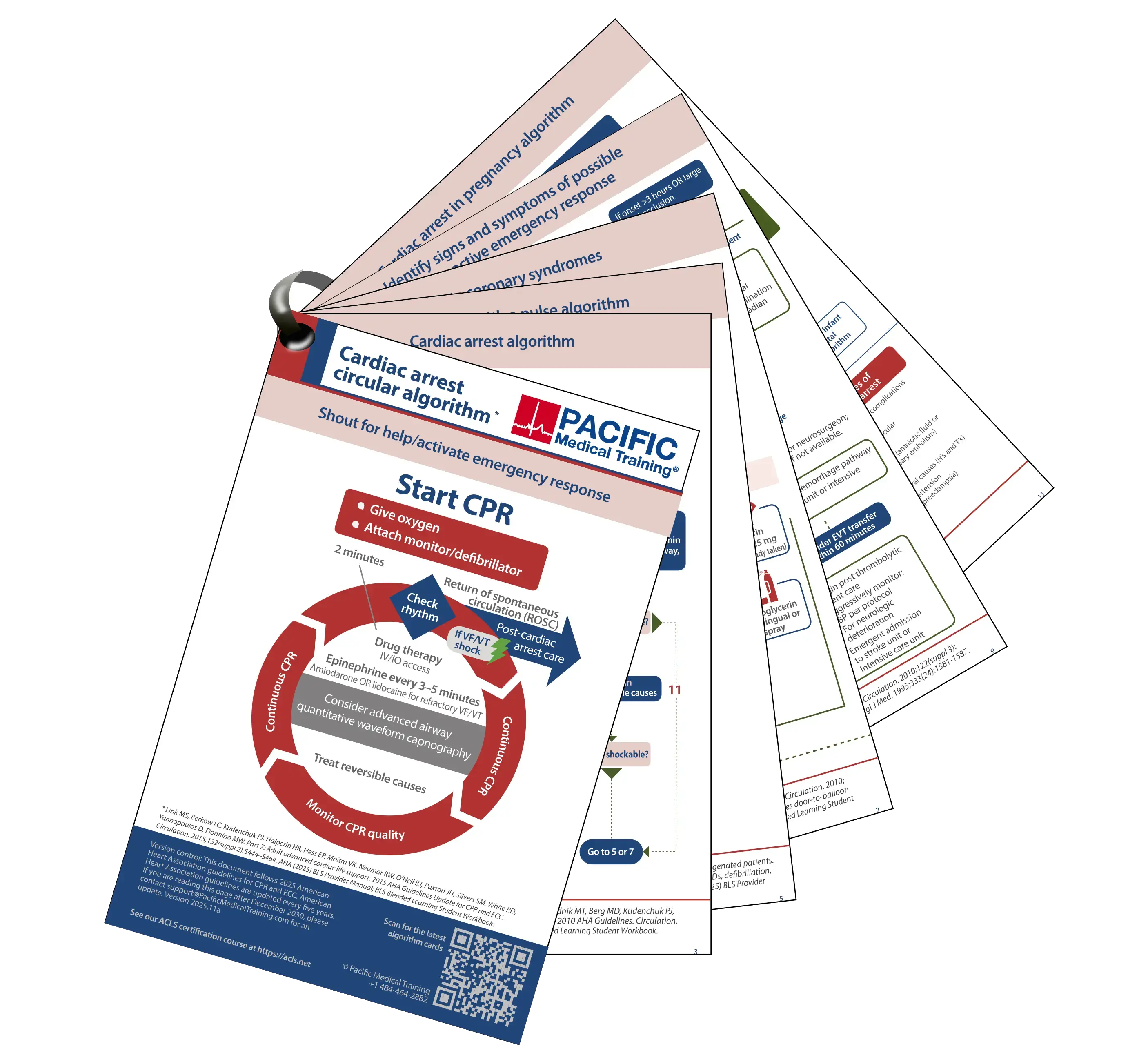
Order the full set of printed crash cart cards.

Perfusion may be considered adequate if the patient demonstrates normal skin color and temperature, normal capillary refill, a mean arterial pressure greater than 50 mm Hg (using Doppler or arterial line if noninvasive blood pressure is unreliable), or an end-tidal CO2 greater than 20 mm Hg. If adequate perfusion is present, continue BLS/ALS care, monitor perfusion status, prepare for transport, and contact the patient's VAD center for guidance.
If perfusion is inadequate, assist ventilation as necessary and immediately assess LVAD function. Listen and observe for LVAD alarms and the presence of the device hum, and verify that the driveline and power connections are secure. Troubleshoot the controller and power sources, replacing the system controller if indicated, while simultaneously addressing reversible non-LVAD causes of unresponsiveness. Common non-LVAD etiologies include dysrhythmias, hemorrhage or hypovolemia, hypoglycemia, hypoxia, overdose, right ventricular failure, sepsis, and stroke.
Management should continuously re-evaluate perfusion and address underlying causes in partnership with the patient's VAD center.

Planning to certify/recertify ACLS?
Get a reminder when you need to take the exam
Please verify or enter a different email address:
How we reviewed this article
Our experts continually monitor the medical science space, and we update our articles when new information becomes available.
- Current versionMail the author of this pageEmail
- Jan 16, 2026
Reviewed by:
Changes: Initial creation